I asked the DMN's Scott Cantrell if he knew why the Dallas Symphony Orchestra musicians turned their backs to the audience during the last ovation of Thursday night's concert. This was after a particularly well-executed performance of Mozart's Symphony No. 40.
He did a little checking and posted an item on The News' Artsblog, which you can see here.
Saturday, January 26, 2013

Friday, January 18, 2013
Why Mozart still rocks
The progress of musical expression since the late 18th century -- in "classical" as well as popular genres -- can leave folks in the 21st century thinking of the music of Mozart as, well, simple or even quaint.
 He wrote the Symphony No. 1 at the age of 8 in London, while on one of his many childhood "prodigy" tours of Europe. The story goes that his father became very ill when they were in London, and young Wolfgang was forbidden to practice so as not to disturb the ailing Leopold. So to pass the time, Wolfgang decided to write a symphony. Pretty much what any 8-year-old will do when he's bored! And while it's obviously not the work of a mature composer, it is surprisingly fresh and innovative.
But in concerts this weekend and next, the Dallas Symphony Orchestra and maestro Jaap van Zweden are only too happy to show you otherwise. They've scheduled a mini-Mozart festival that samples a marvelous range of this Austrian genius's tremendous output.
I attended Thursday night's opening of this weekend's concerts, which are reprised on Friday and Saturday (Jan. 18 and 19). They open with the overture to the Abduction From the Seraglio and then are joined by the superb violinist Augustin Hadelich in the Turkish Violin Concerto. He responded to the tremendous ovation Thursday night with a skillful encore of a Paganini caprice.
The second half of the program is an interesting set of bookends: Mozart's first and last symphonies.
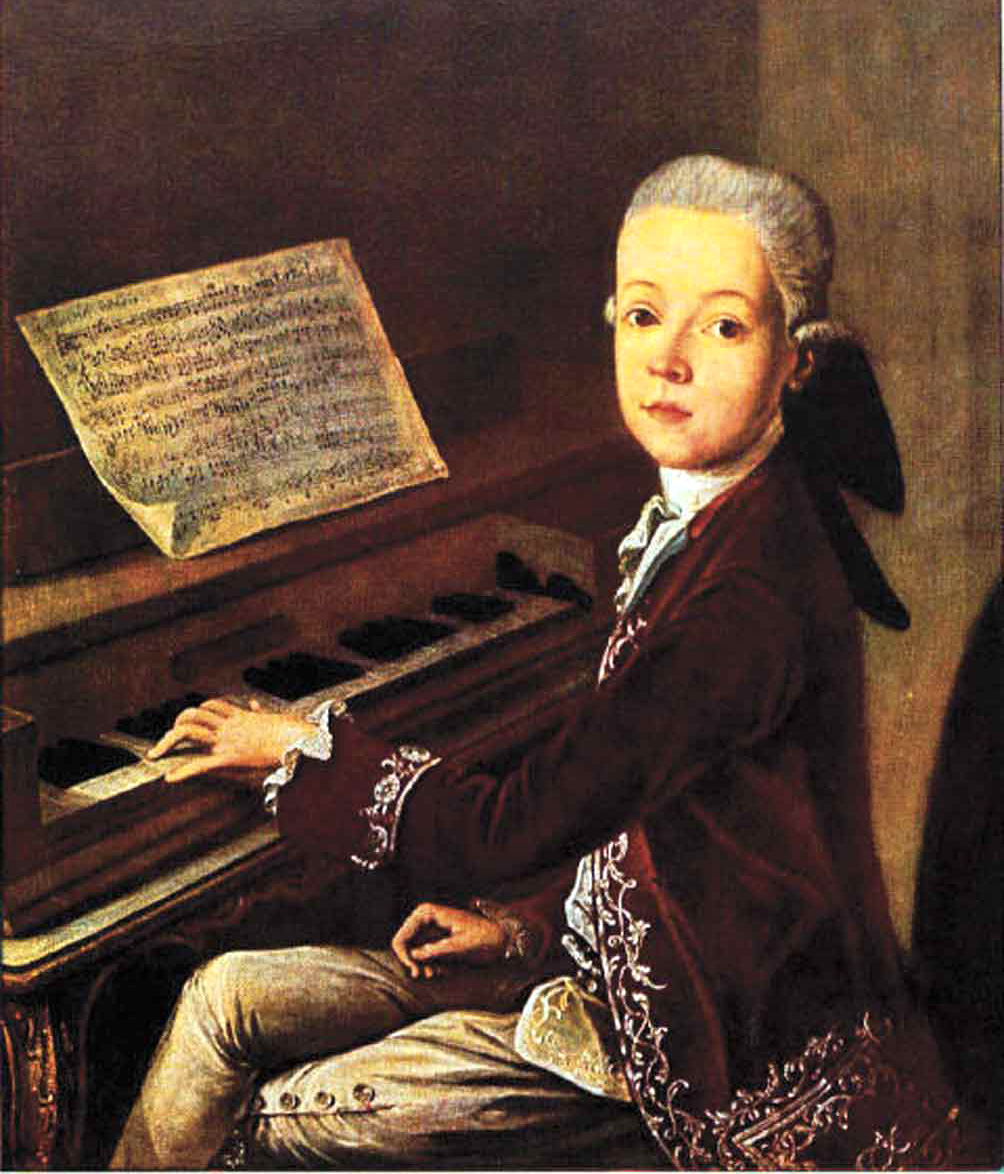 He wrote the Symphony No. 1 at the age of 8 in London, while on one of his many childhood "prodigy" tours of Europe. The story goes that his father became very ill when they were in London, and young Wolfgang was forbidden to practice so as not to disturb the ailing Leopold. So to pass the time, Wolfgang decided to write a symphony. Pretty much what any 8-year-old will do when he's bored! And while it's obviously not the work of a mature composer, it is surprisingly fresh and innovative.
Mozart's final symphony, No. 41 (Jupiter), is of course one of the early landmarks of the symphonic literature. And in the hands of van Zweden and the DSO, it is as thrilling as ever. Few orchestras in the world today are as good at bringing out the subtleties and nuances of great music like this.
Next weekend (Jan. 24-27), we get another all-Mozart program, with the Idomeneo Overture, the Piano Concerto No. 24 with soloist Yefim Bronfman, the Adagio and Fugue, and my personal favorite Mozart symphony, No. 40.
If you want to know why Mozart is still important, get over to the Meyerson this weekend and next.
Saturday, January 12, 2013
Still a phenom at 70
I recently mentioned the Sinfini Music website, which has an interesting piece on one of the current-day legends in classical music: Daniel Barenboim. You can see it here.
The post went up in November in honor of Mr. Barenboim's 70th birthday.
I particularly like the snippet of a rehearsal of Schubert's Trout Quintet, with the incredible cast of Barenboim on piano, Itzhak Perlman and Pinchas Zukerman on violin, Zubin Mehta on bass, and Barenboim's late wife, the incomparable Jacqueline du Pré, on cello. All looking young and vibrant.
I've seen Barenboim in person once, back in 2007 at Carnegie Hall, where he conducted the Vienna Philharmonic in Mendelssohn's Fingal's Cave overture, Schumann's 4th Symphony and a variety of concert pieces from Wagner. A pretty good lineup from one of the world's great orchestras led by one of the world's great conductors.
Of course, as an unabashed Wagnerian, I was especially interested in that part of the program. Barenboim is regarded as one of the best interpreters of Wagner's music, and the VPO a generation or more earlier had helped create what Gramophone magazine called "the greatest recording of all time" -- the first studio recording of The Ring of the Nibelung, conducted by Georg Solti.
And yes, that Sunday matinee concert at Carnegie Hall with Daniel Barenboim exceeded my high expectations.
The post went up in November in honor of Mr. Barenboim's 70th birthday.
I particularly like the snippet of a rehearsal of Schubert's Trout Quintet, with the incredible cast of Barenboim on piano, Itzhak Perlman and Pinchas Zukerman on violin, Zubin Mehta on bass, and Barenboim's late wife, the incomparable Jacqueline du Pré, on cello. All looking young and vibrant.
I've seen Barenboim in person once, back in 2007 at Carnegie Hall, where he conducted the Vienna Philharmonic in Mendelssohn's Fingal's Cave overture, Schumann's 4th Symphony and a variety of concert pieces from Wagner. A pretty good lineup from one of the world's great orchestras led by one of the world's great conductors.
Of course, as an unabashed Wagnerian, I was especially interested in that part of the program. Barenboim is regarded as one of the best interpreters of Wagner's music, and the VPO a generation or more earlier had helped create what Gramophone magazine called "the greatest recording of all time" -- the first studio recording of The Ring of the Nibelung, conducted by Georg Solti.
And yes, that Sunday matinee concert at Carnegie Hall with Daniel Barenboim exceeded my high expectations.
Saturday, December 29, 2012
Those military, musical Schwarzkopfs
Word came the other day of the death of Gen. Norman Schwarzkopf Jr., the architect of the allied victory in the Persian Gulf War of 1991. The "compassionate general" was the closest thing to a war hero for Americans since Eisenhower.
 I noticed in reading his obituary the absence of what I had long thought was a little-known fact: that he was the nephew of Elisabeth Schwarzkopf, one of the leading operatic sopranos of the post-World War II years.
The general's father, H. Norman Schwarzkopf Sr., was a career Army man who was appointed to organize the New Jersey State Police in 1921 and was its commander until 1936. That put him smack dab in the middle of investigating the kidnapping and murder of Charles Lindbergh's baby in 1932, and he testified in the trial of Richard Hauptmann, who was later executed for the crime, although questions about his guilt remain.
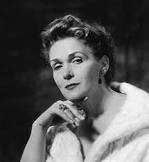 So, quite an accomplished family -- law enforcement professional, war hero, accomplished opera star.
Well, almost. I did some googling and found that the connection to Elisabeth Schwarzkopf was indeed an urban myth, even though it was presented as fact in some obituaries when she died in 2006.
Elisabeth was an only child, so of course she didn't have any nieces or nephews. And her family was as firmly ensconced in middle-class Germany as the Norman Schwarzkopfs were in New Jersey. Norman Sr. was born in Newark in 1895, 20 years before Elisabeth's birth in Poland, and Norman Jr. was born in Trenton in 1934, in the middle of his daddy's biggest case.
The general's father, H. Norman Schwarzkopf Sr., was a career Army man who was appointed to organize the New Jersey State Police in 1921 and was its commander until 1936. That put him smack dab in the middle of investigating the kidnapping and murder of Charles Lindbergh's baby in 1932, and he testified in the trial of Richard Hauptmann, who was later executed for the crime, although questions about his guilt remain.
Well, almost. I did some googling and found that the connection to Elisabeth Schwarzkopf was indeed an urban myth, even though it was presented as fact in some obituaries when she died in 2006.
Elisabeth was an only child, so of course she didn't have any nieces or nephews. And her family was as firmly ensconced in middle-class Germany as the Norman Schwarzkopfs were in New Jersey. Norman Sr. was born in Newark in 1895, 20 years before Elisabeth's birth in Poland, and Norman Jr. was born in Trenton in 1934, in the middle of his daddy's biggest case.
Saturday, December 22, 2012
It's a bass clef Christmas
Do you ever get to where all the partridges in pear trees, little drummer boys and downright sappy "Christmas" songs just start to make you wish it was Dec. 26?
Just for the record, I like Christmas music -- when it's done creatively, with some thought put into it, and keeps in the spirit of the season. It's supposed to be a celebration!
There's a couple of albums that have been out for a few years but I think are really good. One is by the a capella group Straight No Chaser called Christmas Cheers. With songs like the "Christmas Can-Can" and "Who Spiked the Eggnog?" it's the perfect antidote to those whose Christmas songs sound more like funeral music than tunes for the happiest of holidays.
A slightly older album that's also good is Squirrel Nut Zippers' Christmas Caravan, with its jazzy take on the holidays.
And of course there's plenty of live music to be found this time of year. The DSO's Christmas concert is good, I hear, or if you can stand it there's a Polyphonic Spree holiday concert, but I think you've already missed it.
But the one to go hear is undoubtedly the Dallas Merry TubaChristmas concert at noon on Christmas Eve at Thanks-Giving Square in downtown Dallas. It's 150 or more tuba and euphonium players, all volunteers, who bring their too-often-overlooked instrument to perform holiday music for whoever shows up. Actually TubaChristmas events are held all over the world, so if you're not in Dallas, go to www.tubachristmas.com to find one nearby.
Everybody thinks of the tuba as just going oom-pah, oom-pah, but in the right hands, it can produce some really cool music. It just might get you back in the holiday spirit!
Just for the record, I like Christmas music -- when it's done creatively, with some thought put into it, and keeps in the spirit of the season. It's supposed to be a celebration!
There's a couple of albums that have been out for a few years but I think are really good. One is by the a capella group Straight No Chaser called Christmas Cheers. With songs like the "Christmas Can-Can" and "Who Spiked the Eggnog?" it's the perfect antidote to those whose Christmas songs sound more like funeral music than tunes for the happiest of holidays.
A slightly older album that's also good is Squirrel Nut Zippers' Christmas Caravan, with its jazzy take on the holidays.
And of course there's plenty of live music to be found this time of year. The DSO's Christmas concert is good, I hear, or if you can stand it there's a Polyphonic Spree holiday concert, but I think you've already missed it.
But the one to go hear is undoubtedly the Dallas Merry TubaChristmas concert at noon on Christmas Eve at Thanks-Giving Square in downtown Dallas. It's 150 or more tuba and euphonium players, all volunteers, who bring their too-often-overlooked instrument to perform holiday music for whoever shows up. Actually TubaChristmas events are held all over the world, so if you're not in Dallas, go to www.tubachristmas.com to find one nearby.
Everybody thinks of the tuba as just going oom-pah, oom-pah, but in the right hands, it can produce some really cool music. It just might get you back in the holiday spirit!
Tuesday, November 27, 2012
A plug for my competition
There's a pretty cool new website devoted to classical music called SinfiniMusic.com.
It's full of features, videos, interviews, podcasts, columnists, reviews and, of course, music (although you do have to download the Spotify streaming service to listen to more than short excerpts). The site covers just about any subject you can think of: artists, composers, trends, history, you-name-it.
And it's done in a very easy-going and, yes, fun way.
What's cool is that it's designed for all levels of interest in classical music. If you're just curious or mildly interested, there's bound to be something to attract your attention and guide you along. And if you're more of a seasoned expert, there's plenty of meatier commentary to dig into.
Right now there's an interesting featured section on "The Conductor," complete with a video of Roger Norrington explaining what a conductor actually does; a list of the "Top 20 Greatest Conductors" (always subject to disagreement, as the comments show); a podcast interview with the American conductor Marin Alsop, who's now stationed in Brazil; an in-depth look at the 82-CD box set of all of Herbert von Karajan's orchestral recordings from the 1960s (yes, that's 82 CDs!); an interview with Sir Georg Solti's widow; and a look at what has been deemed the greatest classical recording ever: the Solti Ring.
Go check it out!
It's full of features, videos, interviews, podcasts, columnists, reviews and, of course, music (although you do have to download the Spotify streaming service to listen to more than short excerpts). The site covers just about any subject you can think of: artists, composers, trends, history, you-name-it.
And it's done in a very easy-going and, yes, fun way.
What's cool is that it's designed for all levels of interest in classical music. If you're just curious or mildly interested, there's bound to be something to attract your attention and guide you along. And if you're more of a seasoned expert, there's plenty of meatier commentary to dig into.
Right now there's an interesting featured section on "The Conductor," complete with a video of Roger Norrington explaining what a conductor actually does; a list of the "Top 20 Greatest Conductors" (always subject to disagreement, as the comments show); a podcast interview with the American conductor Marin Alsop, who's now stationed in Brazil; an in-depth look at the 82-CD box set of all of Herbert von Karajan's orchestral recordings from the 1960s (yes, that's 82 CDs!); an interview with Sir Georg Solti's widow; and a look at what has been deemed the greatest classical recording ever: the Solti Ring.
Go check it out!
Thursday, November 15, 2012
Elementary, my dear Isolde
My wife and I are hooked on the new CBS show Elementary, the latest in the genre of "this guy is half nuts but he can solve crimes like Sherlock Holmes!" And in this case, it's true, because the show puts a modern-day Sherlock Holmes, a recovering drug addict, in New York City, where he helps the NYPD get the bad guys, assisted by Dr. Joan Watson. Holmes is played by Jonny Lee Miller and Watson by Lucy Liu.
In the pilot, there's a scene in which Dr. Watson has gone to the opera, but Holmes needs to talk to her about the current case, so he shows up mid-performance, finds her and climbs over several patrons to discuss it, occasionally being shushed by others in the audience. I wouldn't have been so polite.
But what grabbed my attention was the music -- the opera he interrupts is Wagner's Tristan und Isolde. It's part of the enchanting second-act duet, and the two singers are shown briefly although the music continues throughout the scene with Holmes and Watson.
The producers chose two up-and-coming young opera singers for this short scene -- soprano Melissa Zapin and baritone Randal Turner. That's right, a baritone, even though Tristan is a tenor, or more specifically a heldentenor. Turns out the real opera singers playing the scene were lip-synching the Tristan duet.
Turner told his home-town newspaper: "People wondered why they couldn't just get an actor to do it. ... It's because it would be difficult for an actor to memorize and sing in German and to breathe where an opera singer would without actually being trained on how to do it."
So, like everybody on TV, these singers were apparently chosen for their looks -- Ms. Zapin is a former Miss Hawaii, and the buff Mr. Turner has been featured on a website called Barihunks. Who knew?
Anyway, in the second episode of the show, Holmes and Watson are walking in Manhattan and pass a sidewalk cafe, where he makes a point to his assistant using a patron's drink. As they're walking away, we see a sign in the background that says "Cafe Isolde."
I was hooked. Not only is it a good show, but it looked like the Tristan references, or maybe similar ones, were going to be a regular occurrence.
Alas, it has turned out not to be. I have yet to see one since. Oh, well. I still like the show.
In the pilot, there's a scene in which Dr. Watson has gone to the opera, but Holmes needs to talk to her about the current case, so he shows up mid-performance, finds her and climbs over several patrons to discuss it, occasionally being shushed by others in the audience. I wouldn't have been so polite.
But what grabbed my attention was the music -- the opera he interrupts is Wagner's Tristan und Isolde. It's part of the enchanting second-act duet, and the two singers are shown briefly although the music continues throughout the scene with Holmes and Watson.
The producers chose two up-and-coming young opera singers for this short scene -- soprano Melissa Zapin and baritone Randal Turner. That's right, a baritone, even though Tristan is a tenor, or more specifically a heldentenor. Turns out the real opera singers playing the scene were lip-synching the Tristan duet.
Turner told his home-town newspaper: "People wondered why they couldn't just get an actor to do it. ... It's because it would be difficult for an actor to memorize and sing in German and to breathe where an opera singer would without actually being trained on how to do it."
So, like everybody on TV, these singers were apparently chosen for their looks -- Ms. Zapin is a former Miss Hawaii, and the buff Mr. Turner has been featured on a website called Barihunks. Who knew?
Anyway, in the second episode of the show, Holmes and Watson are walking in Manhattan and pass a sidewalk cafe, where he makes a point to his assistant using a patron's drink. As they're walking away, we see a sign in the background that says "Cafe Isolde."
I was hooked. Not only is it a good show, but it looked like the Tristan references, or maybe similar ones, were going to be a regular occurrence.
Alas, it has turned out not to be. I have yet to see one since. Oh, well. I still like the show.
Subscribe to:
Posts (Atom)