Thursday, March 28, 2013

Baseball in Europe?

On Easter Sunday, March 31, a little after 7 p.m. local time, at a former railroad station in downtown Houston, a great annual ritual will begin. 

Less than 20 people -- mostly professional athletes but also umpires, base coaches, batboys, ball girls, etc. -- will assemble on a large field, with several thousand baseball fans in surrounding seats and a few million more watching on television. 

At 7:05, the home plate umpire will signal for play to begin, and Bud Norris will throw the first pitch to Texas Rangers second-baseman Ian Kinsler. With that, the Houston Astros will officially enter the American League, and the 2013 major league baseball season will begin. 

I apologize that this long, flowery windup is only to set up a bad joke, but here goes. 

I am a lifelong baseball fan and an unabashed Wagnerian. Richard, not Honus, although I greatly admire the work of both these men, who more than excelled in their chosen fields. They're connected, by the way, because Richard wrote an opera based on the legend of the Flying Dutchman, which also was the nickname of the speedy, German-descended Honus.

If a professional baseball league is ever established in Europe, my dream is to buy the team in Nuremberg (or to the Germans, Nürnberg).

I would have a couple of good choices for a team name, the most obvious of which is Die Meistersinger von Nürnberg (or the Mastersingers of Nuremberg), after Wagner's great comic opera of the same name, which has as one of its main characters a fellow named Hans Sachs, the wise and avuncular cobbler. Although the uniform makers might have some trouble getting the entire team name on the jerseys, one would assume the players on a team with that name could sing "Deutschland Über Alles" before taking the field for each game, so I could save money on an organist. 

But my primary reason for buying the Nuremberg nine would be so I could call it:

The Nürnberg Hans Sox!

I warned you.

Ball spielen!

Monday, March 11, 2013

Now let's go to Eric down on the stage...

When athletes are interviewed after a game, how many times do you hear the same stock answers (usually to the same stock questions) about how we all worked so hard, and we just take this one game at a time, what a great team this is and what great fans we have, etc., etc.? Almost every time? And generally, they never say anything interesting or that you didn't already know.

Well, the same thing has become true in the "interviews" during the intermissions of the Metropolitan Opera's HD transmissions of Saturday matinee performances. They're all very happy and positive and effusive and excited. They all worked so hard, and they all just love every minute they're working together (that's when you start to wonder), and what a great cast and production team this is, etc., etc. And generally, they never say anything interesting or that you didn't already know.

Then there's the frequent problem of the jarring mood change, as in the recent Parsifal transmission. The first act of Wagner's final masterpiece is nearly two hours of gloomy, almost crushing depression (the fantastic music makes it bearable, even uplifting). But after the music ends and the emotionally exhausted audience watches the camera switch backstage, there's the broadcast's happy, effusive "host," baritone Eric Owens, with a big smile on his face as he stops the exhausted lead tenor, Jonas Kaufmann, for a bit of inane banter. This isn't Mr. Owens' fault -- he's just doing what he was hired to do.

And add to that the fact that, due to the international nature of casting almost any opera, but especially at the Met, many of those interviewed have accents that make them practically unintelligible. Perhaps the most interesting thing that happens in the interviews is when one of the singers commandeers the microphone and delivers a message to friends and family back home in their native tongue (as both Kaufmann and bass Rene Pape did during their Parsifal interviews). It's nice to see them speaking confidently, even if you don't know what they're saying, instead of having to watch their sometimes painful struggle to find the right words in English.

Surely the brains who came up with this incredible idea of broadcasting live opera into movie theaters can come up with a better way to fill the intermission time. Why not an expert (not too stuffy, of course) to talk about that day's opera? The radio broadcasts did that for years, but apparently that's too passe now, and they've switched to mostly interviews, too, although their questioners are a little more insightful than the singers who conduct the video "interviews."

I wouldn't mind seeing a broadcast version of the famous Opera Quiz, which has been a staple of the radio broadcasts for longer than most of us have been alive. Even just the backstage cameras showing the incredible Met stagehands changing the sets between acts, which the producers already show between the interviews, would be better.

Back to you, Mel.

Wednesday, February 27, 2013

Van Cliburn

I will leave it to the professional writers to appropriately memorialize the late Van Cliburn. Few American classical musicians have captured the public's attention as he did. Maybe Leonard Bernstein, whose career spanned 50 years, could come close to matching Mr. Cliburn, who was active for only a couple of decades. 

I was only 4 years old when Van Cliburn took the world by storm and set the Soviet propaganda machine on its ear with his victory in the first Tchaikovsky International Piano Competition in Moscow. But I remember what a stir that news caused, not just for my parents, who were very much in tune with such things, but among everyone else around me. 

And to top it off, this was no blustery, in-your-face caricature of a Texan, but a shy, gracious, unfailingly polite young Texas gentleman. A friend of mine who once met Mr. Cliburn at his Fort Worth home can vouch for that aspect of his personality.

But one of my cousins can attest to the influence he had, not only on international politics, but on a generation or more of aspiring young musicians, of whom she was one. Van Cliburn showed her that a kid from Texas could make it as a successful concert pianist. And even if the Cliburn-inspired dream of an 8-year-old Dallas girl would never quite come to fruition (I believe she got as far as a bachelor's degree in music), his greatest gift to us all remains -- the hope inspired by his music.

Tuesday, February 26, 2013

Christmas in February

'Tis the season, as they say.

February is when many orchestras and opera companies announce what they'll be performing in their upcoming season. So while classical music geeks like me can't usually travel to see and hear everything that's going on, we can take a vicarious interest in what we could go see in New York, San Francisco, Chicago, Houston or wherever.

So if you won the Classical Geek Lottery, you could start making plans for:
  • New York Philharmonic: Glenn Dicterow is retiring at the end of the 2013-14 season after 34 years as concertmaster of one of the world's top orchestras. He'll be featured as a soloist in several works, including Beethoven's Triple Concerto. He'll be joined in that work by pianist Yefim Bronfman, the Philharmonic's artist-in-residence who recently performed Mozart's Piano Concerto No. 24 with the Dallas Symphony.
  • Carnegie Hall: The venue with some of the most amazingly diverse programming anywhere plans a three-week festival called "Vienna: City of Dreams," which will include orchestral and operatic masterpieces, chamber music and lieder by Viennese composers from Beethoven and Schubert to Berg and Schoenberg, plus seven concerts by the Vienna Philharmonic.
  • Philadelphia Orchestra: In its second season under music director Yannick Nézet-Séguin, the Philadelphians will honor the 150th birthday of Richard Strauss in several concerts and have commissioned three solo works for three of the orchestra's principal players. They'll also open Carnegie Hall's season.
  • Chicago Lyric Opera: A relatively conservative season includes new productions of Wagner's Parsifal, Verdi's La Traviata, Rossini's Barber of Seville and Dvorak's Rusalka.
  • Chicago Symphony: In the fall, several concerts will celebrate Verdi's bicentenary, including the Requiem and a concert performance of Macbeth. Next year, they'll do all nine Schubert symphonies and in June, guest conductor Jaap van Zweden will lead Shostakovich's Fifth Symphony.
  • San Francisco Opera: They'll do a fall season of five operas, including the world premiere of Tobias Pickers' Dolores Claiborne (based on the Stephen King novel). They'll also honor birthday boy Verdi in October with a performance of his Requiem.
  • Houston Grand Opera: A world premiere, Ricky Ian Gordon's A Coffin in Egypt, and a North American premiere, Mieczyslaw Weinberg's The Passenger, lead the well-regarded HGO's seven-production season, which also includes Das Rheingold, introducing a questionable production of Wagner's Ring that will span four seasons, much as the Dallas Opera did several years ago. And Houston doesn't forget the old standbys, with Aida, Carmen, Rigoletto and Die Fledermaus.
  • Austin Lyric Opera: This small but scrappy outfit will have a three-production season that starts with a couple of heavies: Verdi's Don Carlo in November and Puccini's Tosca early next year. They'll lighten it up in May 2014 with Donizetti's Elixir of Love.
And closer to home:
  • Dallas Symphony: A President John F. Kennedy Memorial Concert is planned for the weekend of Nov. 22, and we get a Beethoven festival in May with the Fifth, Seventh and Ninth symphonies and the Fifth Piano Concerto. I think it's interesting that a group that for years has scheduled instrumental soloists almost exclusively now has a season that will include vocal soloists in six sets of concerts. I know they're trying to be frugal, so are vocal soloists cheaper than instrumentalists? Or maybe it just reflects Maestro Van Zweden's clear affection for opera music.
  • Dallas Opera: Back up to four operas from this season's three, the company is offering Tod Machover's Death and the Powers, starring a gaggle of robots as well as a handful of singers, and Wolfgang Erich Korngold's Die Tote Stadt with tenor Jay Hunter Morris, framed by Carmen and The Barber of Seville. Each production will have its own conductor, absent the company's soon-to-depart music director Graeme Jenkins.
And, like waiting to find out what movie won the Best Picture Oscar, they save the biggest one for last. The Metropolitan Opera announced its 26-production 2013-14 season today. And the biggest news from that actually came out last fall: that music director James Levine would return to the pit after a two-year absence caused by debilitating back problems. He'll conduct a new production of Verdi's Falstaff along with Mozart's Cosi fan tutte and Berg's Wozzeck.

What's notably absent from the Met's lineup is anything by Wagner. My source in New York tells me they had originally penciled in Parsifal and Tannhäuser, with Levine conducting, but they decided he wasn't up to it. Too bad. I guess you don't always get everything you want for Christmas.

Thursday, February 14, 2013

Cafe Isolde NYC

This humble blog usually rocks along with a handful of hits every day, which is fine with me. Then occasionally there will be a spike. Last weekend, I got more than 100 hits on a single day, even though I've been lax lately in updating the blog.

If the statistical elements of Google's Blogger program are to be believed, almost all of those who came here via a search engine were looking for some form of "Cafe Isolde NYC."

So I tried that search myself, and sure enough, the first link is to an item I posted here in November called "Elementary, My Dear Isolde," in which I talked about the TV show Elementary. In the first two episodes last fall, there was a scene involving Wagner's Tristan und Isolde and another in which the show's main characters walked past a sidewalk cafe in New York that had a sign reading "Cafe Isolde."

So welcome to all of you who are looking for Cafe Isolde in New York City. As best I can tell from my own meager Internet searches, there is no such eatery in the Big Apple, although sometimes smaller restaurants fly under the radar.

If anyone knows about such a place, please let me know. But I'm not sure I'd drink anything they had to offer!

Saturday, January 26, 2013

Turning their backs

I asked the DMN's Scott Cantrell if he knew why the Dallas Symphony Orchestra musicians turned their backs to the audience during the last ovation of Thursday night's concert. This was after a particularly well-executed performance of Mozart's Symphony No. 40.

He did a little checking and posted an item on The News' Artsblog, which you can see here.

Friday, January 18, 2013

Why Mozart still rocks

The progress of musical expression since the late 18th century -- in "classical" as well as popular genres -- can leave folks in the 21st century thinking of the music of Mozart as, well, simple or even quaint.

But in concerts this weekend and next, the Dallas Symphony Orchestra and maestro Jaap van Zweden are only too happy to show you otherwise. They've scheduled a mini-Mozart festival that samples a marvelous range of this Austrian genius's tremendous output.

I attended Thursday night's opening of this weekend's concerts, which are reprised on Friday and Saturday (Jan. 18 and 19). They open with the overture to the Abduction From the Seraglio and then are joined by the superb violinist Augustin Hadelich in the Turkish Violin Concerto. He responded to the tremendous ovation Thursday night with a skillful encore of a Paganini caprice.

The second half of the program is an interesting set of bookends: Mozart's first and last symphonies.

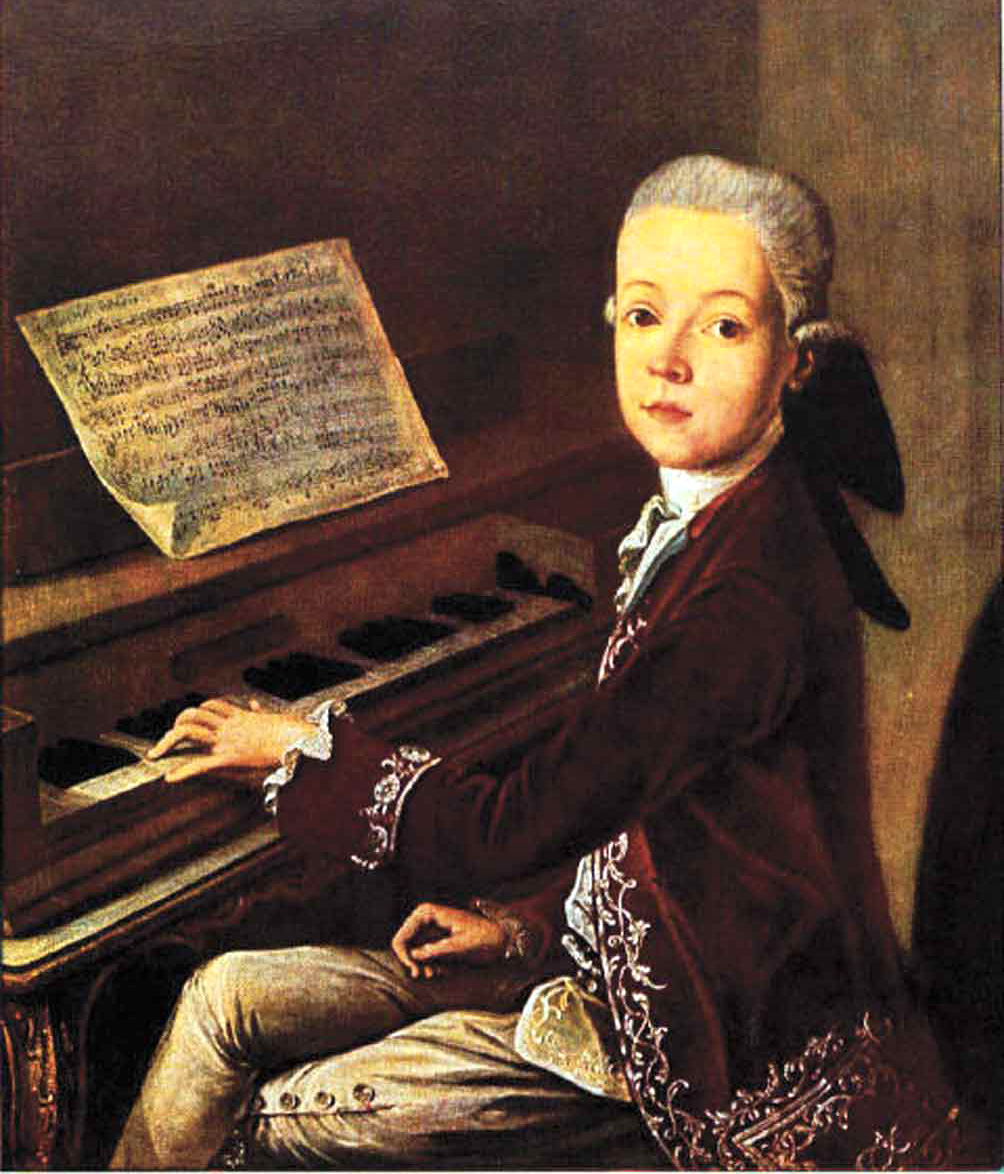
He wrote the Symphony No. 1 at the age of 8 in London, while on one of his many childhood "prodigy" tours of Europe. The story goes that his father became very ill when they were in London, and young Wolfgang was forbidden to practice so as not to disturb the ailing Leopold. So to pass the time, Wolfgang decided to write a symphony. Pretty much what any 8-year-old will do when he's bored! And while it's obviously not the work of a mature composer, it is surprisingly fresh and innovative.

Mozart's final symphony, No. 41 (Jupiter), is of course one of the early landmarks of the symphonic literature. And in the hands of van Zweden and the DSO, it is as thrilling as ever. Few orchestras in the world today are as good at bringing out the subtleties and nuances of great music like this.

Next weekend (Jan. 24-27), we get another all-Mozart program, with the Idomeneo Overture, the Piano Concerto No. 24 with soloist Yefim Bronfman, the Adagio and Fugue, and my personal favorite Mozart symphony, No. 40.

If you want to know why Mozart is still important, get over to the Meyerson this weekend and next.